REVIEW · CAPPADOCIA
Cappadocia : Dervish Sema Ceremony in Cappadocia
Book on GetYourGuide →Operated by Emoji Turismo · Bookable on GetYourGuide
The first time I saw the Dervish Sema described, I expected a show. What I didn’t expect was how much the Mevlevi ritual feels like a guided spiritual story, step by step. I love the way the ceremony is staged as a respectful performance with live musicians, and I love the small human touch at the end with sherbet and a chance to talk. One possible drawback: the dancing can feel repetitive in the middle if you’re hoping for constant variety, and the whole experience is shorter than people often assume.
This ceremony is tied to the Mevlevi tradition of Sufism and presented in a format protected as UNESCO-recognized cultural heritage. You’ll be sitting for a focused hour-ish block, watching the sema structure unfold in musical modes that change the tempo and mood. If you go in expecting a long essay-style explanation, you may have to accept that the meaning is carried mostly through the ritual and music.
The price is $34 per person, and for Cappadocia, that’s usually where the value comes in: hotel pickup and drop-off, the performance itself, and the sherbet finish. It’s also a smart choice if you want something cultural that doesn’t require you to navigate timing, seating, or language on your own—especially when an English-speaking driver handles the logistics.
In This Review
- Key things to know before you go
- Why the Mevlevi Sema in Cappadocia feels like more than a performance
- The ritual structure: four sections, seven chapters, and why it matters
- Getting there in Cappadocia without turning it into a project
- What happens around the venue: photos, a visit, then the ceremony
- Watching the sema: seating, pacing, and how to focus during the music
- The sherbet finish and the chance to chat with performers
- Price and value: why $34 can make sense in Cappadocia
- Who this tour suits best
- Should you book the Cappadocia Dervish Sema?
- FAQ
- How long is the Cappadocia Mevlevi Dervish Sema ceremony?
- How much does it cost?
- Where are the pickup and drop-off locations?
- What’s included in the ticket?
- Is the driver available in English?
- Is the experience wheelchair accessible?
Key things to know before you go
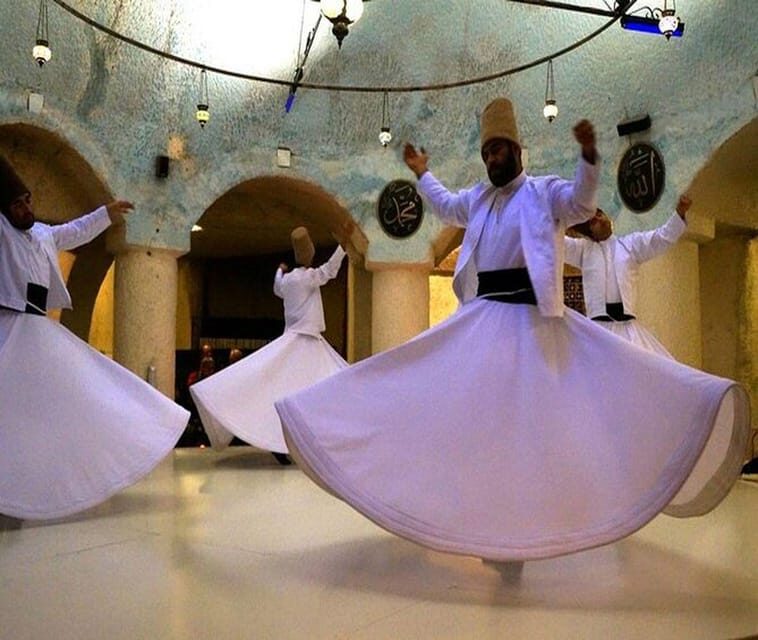
- UNESCO-protected Mevlevi Sema in a formal, respectful presentation
- Four sections and seven chapters, lasting at least 45 minutes
- Live music that drives the ceremony’s changing musical modes
- Sherbet at the end, plus a chance to chat with performers
- Pickup options across Ortahisar, Göreme, Çavuşin, Ürgüp, Uçhisar, and Avanos
- English-speaking driver and wheelchair accessibility
Why the Mevlevi Sema in Cappadocia feels like more than a performance
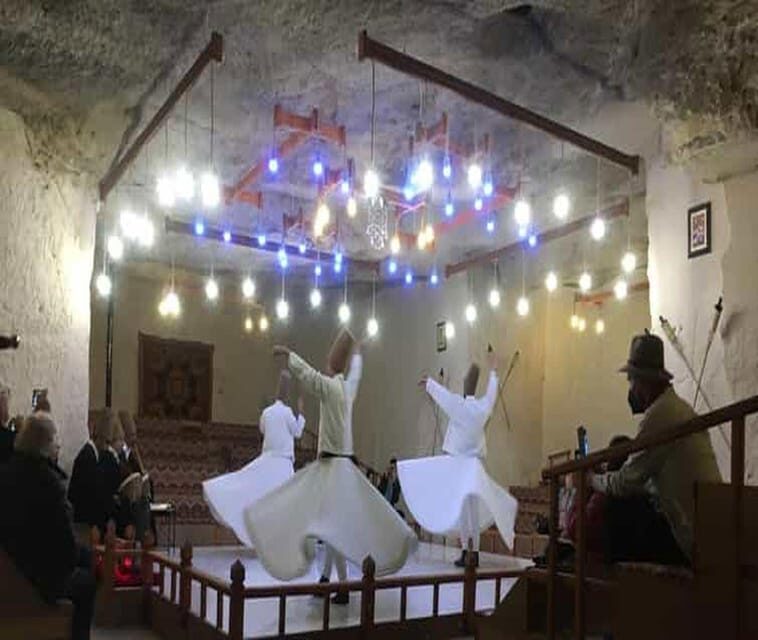
Cappadocia is famous for caves, valleys, and sunrise balloons. This night-time (or evening) activity gives you a different angle on Turkish culture: a ceremony where movement, music, and timing work together like a language. The sema you’re watching is the Mevlevi Sema, a ritual that’s been performed for centuries, not a modern dance routine slapped onto a tourist schedule.
What I really like is that the staging aims to keep the ritual’s etiquette intact. The executive team is trained in dervish lodge education and manners, and they perform the ceremony secularly. That matters because it changes the vibe: you’re not watching something disrespectful or chaotic. You’re watching something structured and intentional.
And then there’s the music. The ceremony’s duration can vary depending on the musical modes, but it’s still tied to the same sema framework used in Mevlana’s era in terms of Sufism. In practice, that means you’re not just seeing repeats for the sake of filling time—you’re seeing a ritual that shifts its feel as the musicians guide the flow.
If you’re expecting a full, theatrical script with narration, temper that expectation. The meaning lands through what the dancers do and how the musicians shape the atmosphere, not through a spoken lecture.
You can also read our reviews of more tours and experiences in Cappadocia.


The ritual structure: four sections, seven chapters, and why it matters
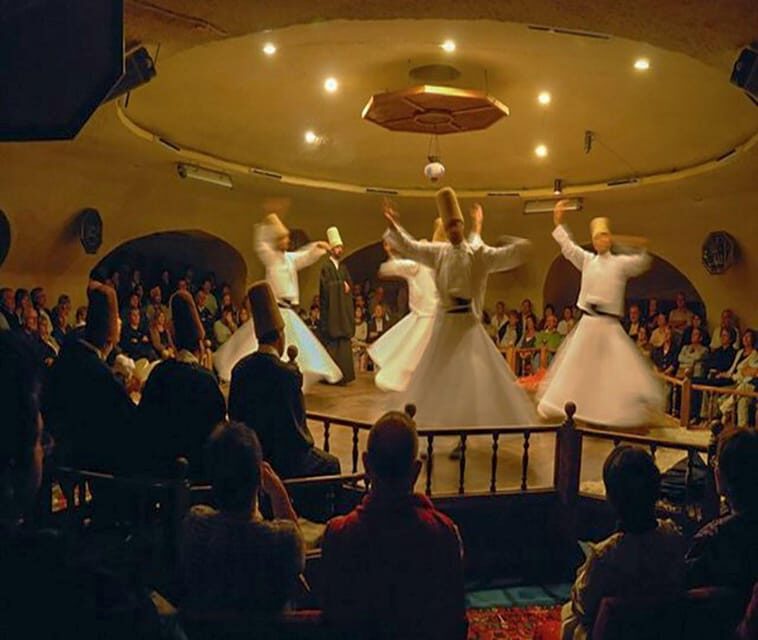
This isn’t just “watch dancers spin.” The Mevlevi Ceremony includes four sections and seven chapters. The whole experience lasts at least 45 minutes, and it can run longer or shorter based on the musical modes used during that particular performance.
Why that structure is worth caring about: when the rhythm shifts, the visual focus shifts too. The sema journey is often described as a spiritual journey of the soul, but in the moment, you’ll feel it as pacing. The ceremony isn’t one continuous clip; it’s broken into movements that build and transition.
Another detail that sets this presentation apart is how it’s organized. The Sema committee performs the ceremony according to a circular published by the Ministry of Culture. In plain terms: it’s not a free-for-all interpretation. It’s guided by an established framework that aims to keep the ceremony consistent, even when a group is performing it for visitors.
One more practical point: the dancers may appear to do similar steps within each section because the ritual has repetition. That’s not a flaw in the choreography—it’s part of how the ceremony reaches its rhythm. Still, if you’re sensitive to monotony, you might find the middle portion a bit long before a new section begins.
Getting there in Cappadocia without turning it into a project
Cappadocia tours can fall apart if you have to coordinate pickup, parking, and timing yourself. Here, you get pickup and drop-off from hotels across multiple towns: Ortahisar, Göreme, Çavuşin, Ürgüp, Uçhisar, and Avanos. That’s huge value because it removes the need to fight with local transport schedules after a long day.
I also like the way the transfer experience can feel “small group” and direct. In at least one case, people rode in a private vehicle with a high-end feel, and the driver was active in getting you set up quickly. Another detail that helps: the driver can walk you into the event so you’re not standing around trying to find the right entrance or seating area.
The duration is listed as 1 hour, so you’re not signing up for an all-day commitment. That’s helpful if you already plan to do things like sunset viewpoints or an early dinner. You’ll still want to arrive with enough buffer that you’re seated comfortably, but you won’t be stuck on the road for hours.
What happens around the venue: photos, a visit, then the ceremony
Before the main sema experience, there’s time included for a photo stop and a visit in Cappadocia, plus a traditional dance show component as part of the overall experience block. This is the part that’s easy to overthink, so here’s the practical way I’d treat it:
- Use the photo stop for quick shots and orientation, not for an all-out photo session.
- Use the included visit to get oriented so you understand where you are when it’s time to settle in.
- Treat any traditional dance show as a warm-up, not the main story.
The trade-off is that this format can move at a moderate pace. If you love slow travel and hate transitions, you might feel slightly rushed between stops. Still, the payoff is that you’re spending your time on curated cultural moments rather than commuting between random points.
Watching the sema: seating, pacing, and how to focus during the music
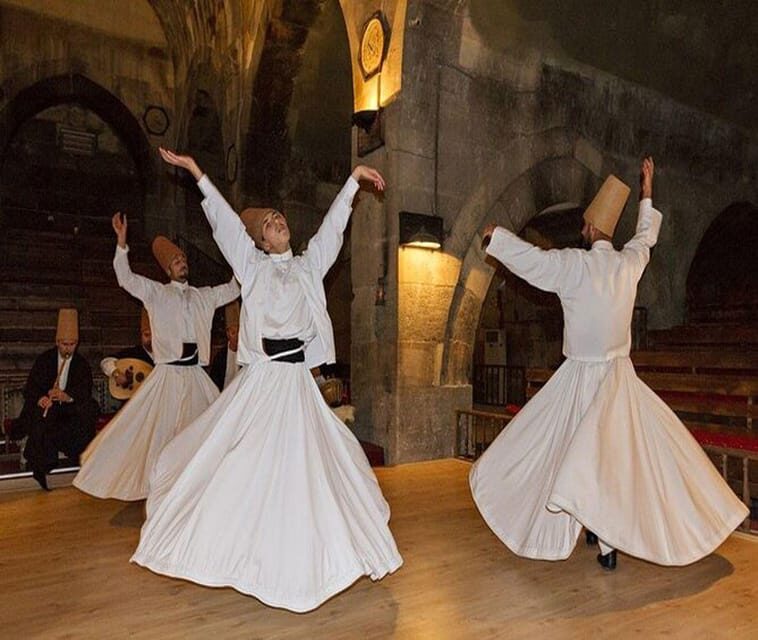
When you arrive, you’ll typically be guided into the event space and directed to seating. Some people get front-row seats, which makes a difference because you can see the details of the clothing movement and the direction of the arms and steps more clearly. Even if you’re not front row, keep your focus on the ceremony’s rhythm changes—those are the moments that make the repeating patterns feel purposeful.
Here’s how I recommend watching:
- Follow the musical mood. When the musicians shift modes, your visual focus should shift too.
- Don’t try to “spot novelty” in every minute. Instead, look for section changes—those transitions tell you you’re moving through the ceremony’s chapters.
- Watch how the dancers’ movement responds to the music’s structure. The ceremony isn’t just motion; it’s motion tied to time.
Based on feedback tied to this exact experience format, the performance can feel like it repeats similar dancing for a stretch (around 40 minutes mentioned in one account). That doesn’t mean it’s low-effort—it means the ritual is designed around meditative repetition. If your attention span is short, you can still enjoy it by centering on the music and the transitions between sections.


The sherbet finish and the chance to chat with performers
At the end, the experience includes a glass of sherbet. It’s a small detail, but it’s one of those finishes that makes the whole thing feel complete. Instead of leaving straight into the night, you get a calming pause and something local to sip.
The tour also includes time to chat with the performers. That said, timing can vary. In one account, people didn’t get much chance to talk, likely because the flow of exiting and organizing visitors can be tight. My practical advice: treat the chat as a bonus, not a guaranteed long conversation.
If you do get a moment, ask simple, respectful questions. Keep them about what you just watched—like what the music changes mean or what the ritual structure feels like for the dancers. You’ll get more useful answers than asking broad spiritual questions, especially when time is limited.
Price and value: why $34 can make sense in Cappadocia
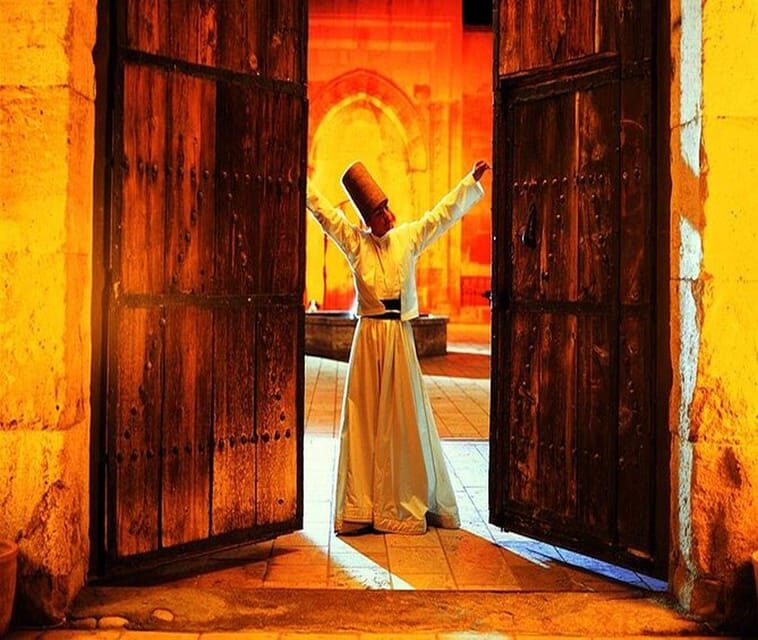
At $34 per person for an hour-long cultural ceremony, the real value isn’t only the show. It’s that the package wraps in:
- pickup and drop-off from multiple Cappadocia towns
- the Sema performance itself
- sherbet
- an opportunity to chat with performers
- an English-speaking driver
In Cappadocia, transport can quietly become the expensive part—especially at the end of the day when you don’t want to gamble on timing. This package shifts the cost from “figuring it out” to “watching something you came to see.”
What it doesn’t include (at least from the provided details): you should budget for any additional meals or drinks before and after. The ceremony ends with sherbet, but it isn’t a full dinner plan.
Also, match expectations to format. This is a focused performance experience, not a long cultural deep-dive with guides talking for hours. If you want a history lecture, you might pair this with a daytime visit to a museum or a guided walking tour.
Who this tour suits best
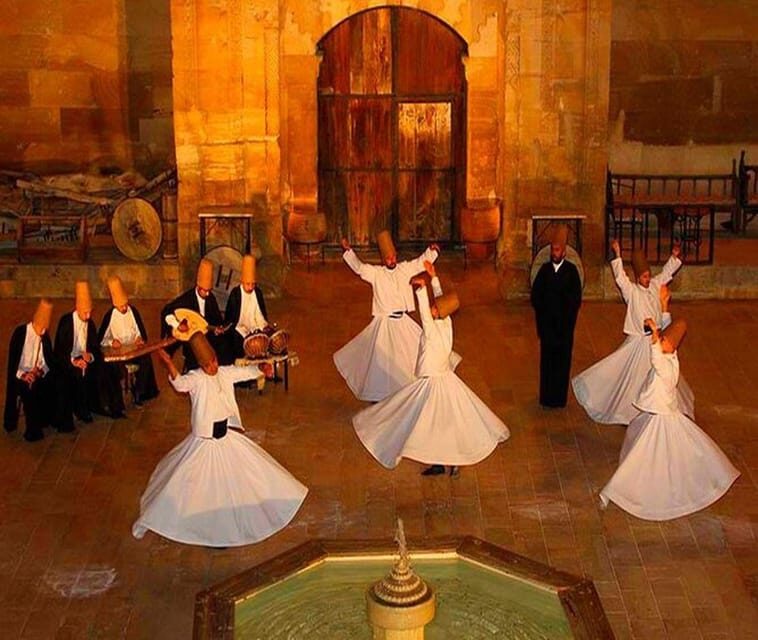
This experience is a strong fit if you:
- want a cultural activity that’s easy to plan
- like live music and formal performances
- prefer guided logistics (pickup/drop-off handled)
- want a short, meaningful evening option without driving
It’s also a good choice if you’re traveling with mixed interests. People who don’t love dance can still enjoy the live musicians and the ritual structure. And people who love performance will appreciate the choreography’s formal rules and the way the ceremony unfolds in sections.
If you hate repetition in performances, go with eyes open. The sema has repeating movement patterns because that’s how the ritual works. You’ll enjoy it more if you treat it like music-driven storytelling rather than a series of nonstop “new” dances.
Should you book the Cappadocia Dervish Sema?
I think it’s worth booking if you want a respectful, structured cultural experience with minimal hassle. The price feels fair when you factor in hotel pickup, the performance, and sherbet—plus the English driver handling the tricky parts. The ceremony’s design (four sections, seven chapters, live musicians) gives you a real reason to sit and pay attention.
Don’t book it expecting a long guided explanation. Instead, treat it like a focused hour of live ritual, where the meaning comes through music, timing, and movement. If you want your evening to be calm, cultural, and logistically simple, this is a solid match.
FAQ
How long is the Cappadocia Mevlevi Dervish Sema ceremony?
The experience is listed as 1 hour. The Mevlevi Ceremony itself lasts at least 45 minutes, with duration varying according to the musical modes.
How much does it cost?
It costs $34 per person.
Where are the pickup and drop-off locations?
Pickup is offered from Ortahisar, Göreme, Çavuşin, Ürgüp, Uçhisar, and Avanos. Drop-off is available in Ortahisar, Avanos, Uçhisar, Ürgüp, Göreme, and Çavuşin.
What’s included in the ticket?
You get pickup and drop-off from hotels, the Sema performance, sherbet, and time to chat with the performers.
Is the driver available in English?
Yes. The driver is listed as English.
Is the experience wheelchair accessible?
Yes, the activity is listed as wheelchair accessible.