REVIEW · GOREME
Southeast Anatolia Tour (Nemrut, Gobeklitepe, Zeugma)
Book on Viator →Operated by Hereke Travel · Bookable on Viator
Your next history obsession starts at stone circles. In three days, this Southeast Anatolia route strings together Göbeklitepe, Mount Nemrut sunrise, and Zeugma’s mosaics, moving from the birth of early ritual to monumental Hellenistic power. It also uses a practical, all-inclusive format with meals and ticketed entries so you spend less time figuring things out and more time looking at the evidence.
Two big things I like: the lineup is age-spanning in a way that actually makes sense, and the pace is organized enough to keep it enjoyable even if you have mixed ages in your group. I also like that you get time in places that feel physically remote, not just museum-style stops.
The one drawback to plan around is that Nemrut requires good weather and that means your experience may depend on conditions. You should also expect early, long days with plenty of walking and stairs at ancient sites.
In This Review
- Key highlights to look for
- From Göreme to the southeast: why this route hits hard
- Karatay Han: a quiet roadside building with trade-route energy
- Mount Nemrut at dawn: Antiochos’s giants and the early-morning payoff
- Göbeklitepe: the early-temple shock to your sense of history
- Zeugma Mosaic Museum: learning a whole city through reconstructed scenes
- Price and what you truly get for about $984.82
- Timing, comfort, and how early starts shape the day
- Who should book this Southeast Anatolia tour
- Should you book it
- FAQ
- Where does the tour start?
- How long is the Southeast Anatolia tour?
- What does the price include at this tour level?
- Are admission tickets included for the main stops?
- Is this tour private or shared with other people?
- Do I need paper tickets?
- What are the operating dates and hours?
- What happens if weather is bad for Nemrut?
- Is cancellation free?
Key highlights to look for
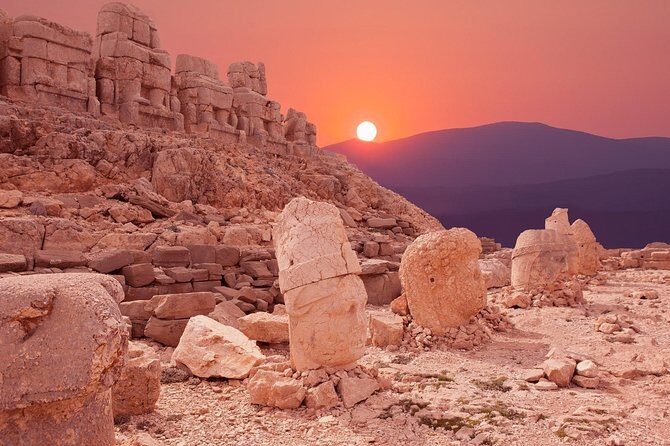
- Göbeklitepe’s megalithic structures from the Pre-Pottery Neolithic period (about 9,600–8,200 BCE)
- Nemrut Dağ at dawn tied to the late Hellenistic King Antiochos I (69–34 B.C.)
- A guided, ticket-included format that keeps the logistics simple
- Karatay Han on the old Kayseri–Malatya trade road into Syria
- Zeugma Mosaic Museum replicas that help you picture how the city lived
- Private-group feel so the day doesn’t feel like a cattle chute
From Göreme to the southeast: why this route hits hard
Starting from Göreme, Turkey, this tour turns a few days into a serious history sprint across southeast Anatolia. The best part is how the three anchor stops connect in your head: you go from an incredibly early monumental ritual site, to a mountaintop statement by a Hellenistic king, and then to a museum that reconstructs a Greco-Roman city’s everyday life through art and architecture.
You’ll feel the geography working for you. Göbeklitepe sits in the Germuş Mountains region, Nemrut rises over the Eastern Taurus, and Zeugma is tied to Gaziantep’s wider cultural orbit. That means the tour doesn’t just show dates on a timeline. It shows how people chose places—valleys, ridges, and sanctuaries—for meaning.
I also like the tour’s practical structure. You’re not just paying for access to sites; you’re paying for meals, lodging, and admission tickets included, which removes a lot of trip-friction. When you compare that to piecing it together yourself, this format tends to feel fair, especially when you factor in transport and entry costs.
You can also read our reviews of more tours and experiences in Goreme.


Karatay Han: a quiet roadside building with trade-route energy
Your day begins with Karatay Han, a 13th-century caravanserai built on the old Kayseri–Malatya road. Even if the village around it feels calm today, the han’s location tells a different story: it sat along a main trade artery into Syria, with traffic flowing from Syria, Iraq, eastern Anatolia, and Iran toward Kayseri and Sivas.
The result is that Karatay Han is less about one dramatic ruin and more about reading a landscape. You can look at the building’s purpose and imagine the rhythms of a trade stop: travelers pausing, animals being managed, goods changing hands, and local towns gaining a commercial pulse.
What I like here for your trip: it’s a strong warm-up to the rest of the tour. After hours of travel, Karatay Han gives you a human-scale historical context before you jump into huge, mind-bending ancient monuments.
A consideration: there’s no sense of instant spectacle the way there is at a major temple ruin or a famous mosaic museum. If you only want peak wow moments all day, you might find this stop more thoughtful than flashy. Still, it’s exactly the kind of “in-between” place that makes a route feel grounded.
Mount Nemrut at dawn: Antiochos’s giants and the early-morning payoff
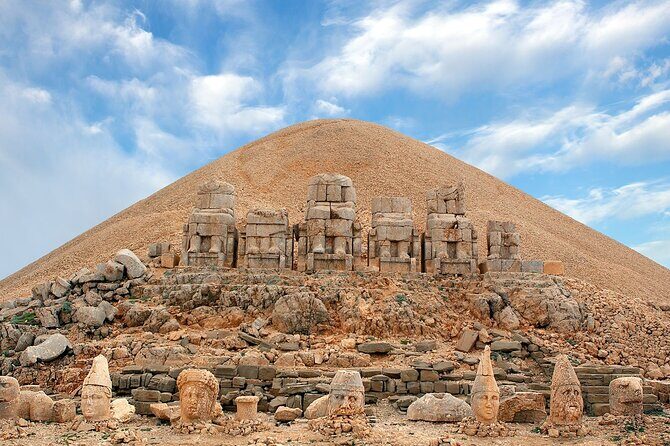
Then you move to Mount Nemrut (Nemrut Dağ), one of the highest peaks of the Eastern Taurus range in southeast Turkey. This is the stop people picture when they think of a monumental sunrise day. The site is the Hierothesion (a temple-tomb and house of the gods), built by the late Hellenistic King Antiochos I (69–34 B.C.) as a monument tied to his own legacy.
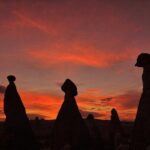
What makes Nemrut special is the mix of scale and symbolism. The statues and stone arrangements are designed for viewing, and sunrise changes how you see them. Light hits faces differently. Shadows make the scene feel both ancient and theatrical, like the mountain is staging a show.
What you’ll likely notice most: the site feels otherworldly because you’re high up, exposed to wind and open sky, and surrounded by a horizon that makes the rest of Turkey feel far away. Even if you’ve seen big ruins before, this one’s visual impact is its own category.
One practical note for your comfort: Nemrut is a dawn experience, which means colder air and less forgiving ground conditions. Wear layers you can manage quickly, and plan for walking and uneven stone. Also give yourself enough time to settle your breathing and eyes before you’re trying to watch the sun rise.
Value angle: Nemrut is included with its admission ticket, which matters because the “what you pay for” here is closely tied to the timed experience. If you book independently, you’ll often end up juggling entry rules and schedules. This tour structure saves you that headache.
Göbeklitepe: the early-temple shock to your sense of history
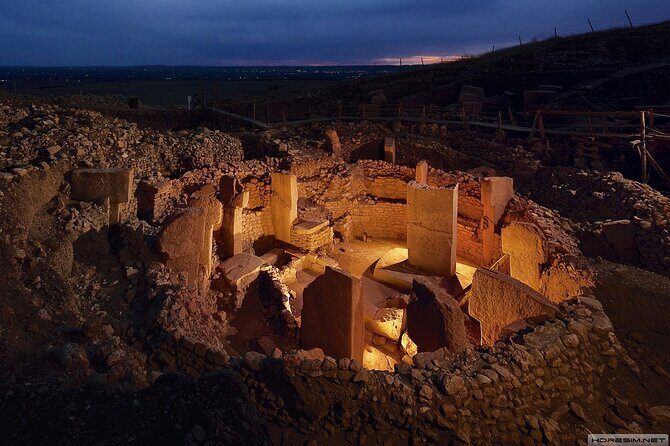
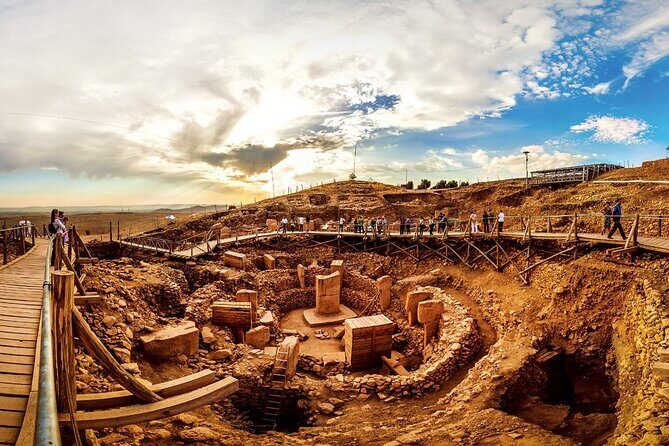
If Nemrut is about power made visible, Göbeklitepe is about the timeline of human thinking. This site is in the Germuş Mountains of southeast Anatolia and features monumental round-oval and rectangular megalithic structures built by hunter-gatherers in the Pre-Pottery Neolithic period, dated roughly 9,600 to 8,200 BCE.
Even saying that number out loud feels unreal. The point is not just age—it’s the implication. Göbeklitepe challenges the easy story that complex building only happened after settled farming. Instead, you’re standing in a place where communities organized labor around ritual long before the modern idea of “civilization” arrives.
What you’ll love about this stop: it’s a history moment that feels human. These aren’t statues posed for tourists; they’re structures built by people who were still figuring out how to create meaning with stone. The sheer workmanship and intentional layout make you slow down.
What to consider: Göbeklitepe is active archaeology, and sites like this are meant to help you interpret ongoing research. That can be thrilling if you enjoy connecting evidence to questions. If you only want completed monuments with zero uncertainty, you might wish for clearer “this is exactly what it was used for” answers. Still, the best part of Göbeklitepe is that it gives you something to think about long after you’ve left.
The logistics win: admission is included, so you’re not spending time at the start sorting tickets. You’re also getting it in a multi-day flow, which helps your brain absorb how radically different periods can share a region.
Zeugma Mosaic Museum: learning a whole city through reconstructed scenes
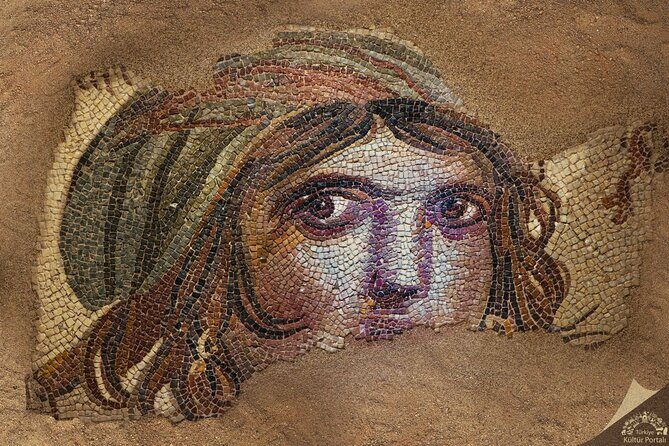
On day three, you shift from outdoor archaeology to a museum designed to help you see everyday life. The Zeugma Mosaic Museum focuses on lifestyle, culture, and beliefs of people who lived in the ancient city of Zeugma by recreating the environment around them.
Instead of relying only on flat artworks behind glass, the museum uses full-scale replicas: a street, a fountain, building walls, and foundation stones. The idea is that mosaics and fragments make more sense when you can imagine the space they belonged to.
Why this works for your trip: after Göbeklitepe and Nemrut, your brain is probably overloaded with “how big can history get.” Zeugma gives you a different kind of satisfaction. It’s about daily rhythms—how neighborhoods connected, how public spaces looked, and how visual art filled those spaces.
A possible drawback: museum time can feel more stationary than outdoor sites, especially if you’re hoping for more dramatic ruins. But the reconstructed scenes do a good job of turning the museum into a place you can walk through with your imagination.
And the food angle: the tour’s overall pitch is tied to Gaziantep’s food culture as a final flourish. Even if you mainly treat that as an extra bonus, it’s a smart way to close a history-heavy trip with something you can taste and share.



Price and what you truly get for about $984.82
At $984.82 per person, the big question is value: what are you buying besides sight time?
Based on what’s included, you’re effectively paying for:
- Two nights of accommodation
- Meals: breakfast (2), dinner (2), and lunch (3)
- Admissions: each stop listed has admission tickets included
- Pickup offered, plus a small-group / private-group experience
When you price it out as separate line items—hotel nights, guided transport, daily entry fees, and then food—this kind of package tends to compete well with independent travel, especially in regions where timing and long drives matter. The private-group setup also matters more than many people think. It reduces waiting and schedule friction, and it helps keep the day moving with fewer gaps.
I’ll add one more practical value point: the tour uses a mobile ticket, so you’re not chasing paper vouchers.
If your travel style is “I want the planning done for me,” this package fits. If your style is “I love to control every step,” you might feel it’s more structured than you prefer. But for this route, structured often means smoother.
Timing, comfort, and how early starts shape the day
Even though the day-by-day stops are spread across three days, the rhythm of the trip is driven by early-morning priorities, especially around Nemrut and the dawn viewing. The operating window listed (5:00 AM to 5:00 PM) also hints at how the days are designed to start early and run with daylight.
For your comfort, think in terms of three realities:
- Cold mornings are real at high altitude, even when the rest of the region feels mild later.
- Walking is part of the experience, including uneven stone and stairs around archaeological areas.
- You’ll want small breaks and snacks to keep energy steady between sites.
The tour includes multiple meals, which helps a lot. You’re not hunting for food on the fly. Still, I recommend you bring a small personal stash for the moments where your group timing and your appetite don’t match perfectly.
One more comfort note: the reviews you shared highlight that families with children and older adults managed well on this kind of schedule. That tells me the pace is handled thoughtfully, not thrown at people without a plan. Still, if you have mobility concerns, make sure you’re comfortable with the kind of short, repeated walking ancient sites require.
Who should book this Southeast Anatolia tour
This tour is a strong fit if you:
- Love big, dated historical sites and want them organized into one logical route
- Want guided context so the sites feel meaningful, not just photographed
- Appreciate a private-group style where schedules don’t feel chaotic
- Travel with mixed ages and need a plan that doesn’t assume everyone moves at the same speed
It’s also good for travelers who like the mix of outdoors plus museum time. You get high-altitude dawn viewing, open-air prehistory, and then an indoor museum that reconstructs a lived city.
If you’re only interested in one subject—say, only mosaics or only Hellenistic monuments—this might feel like “too much, too fast.” But if you enjoy connecting themes across time, it’s exactly the right format.
And a small but important detail: the guide name mentioned in the reviews, Ramazan, came up with praise for passion and enthusiasm for Turkish history. A good guide makes a difference on sites like these where symbolism and dates can blur if you don’t have a human translator.
Should you book it
Book this tour if you want a smooth, ticketed, meal-included way to hit three of southeast Turkey’s most influential historical experiences—Göbeklitepe, Nemrut, and Zeugma—without turning your trip into a logistics project.
Skip or reconsider if you hate early starts, you’re extremely sensitive to cold mornings, or you’re the type who needs guaranteed weather for outdoor highlights. Since Nemrut depends on conditions, you should be flexible enough to roll with a plan adjustment if the day needs it.
If you’re somewhere in the middle—curious, comfortable with walking, and happy to be guided—this is the kind of itinerary that sticks with you. The best part is not just that the sites are famous. It’s that they’re arranged so you start seeing how people in this region built meaning, power, and daily life across wildly different eras.
FAQ
Where does the tour start?
The tour is based in Göreme, Turkey. Pickup is offered.
How long is the Southeast Anatolia tour?
It runs for about 3 days.
What does the price include at this tour level?
Accommodation for 2 nights, breakfast (2), dinner (2), lunch (3), and admission tickets for the listed stops are included.
Are admission tickets included for the main stops?
Yes. Admission tickets are included for Karatay Han, Mount Nemrut, Göbeklitepe, and the Zeugma Mosaic Museum.
Is this tour private or shared with other people?
It’s private. Only your group participates.
Do I need paper tickets?
A mobile ticket is included.
What are the operating dates and hours?
The listed opening period is 01/12/2026 to 02/28/2026, and it runs Monday to Sunday from 5:00 AM to 5:00 PM.
What happens if weather is bad for Nemrut?
The experience requires good weather. If it’s canceled due to poor weather, you’ll be offered a different date or a full refund.
Is cancellation free?
Yes. You can cancel up to 24 hours in advance for a full refund. If you cancel less than 24 hours before the start time, the amount paid is not refunded.